Anyone who has tried sourcing wholesale toys for the first time knows the feeling. You start with a simple plan, order a good mix of toys at a decent price, and within an hour of talking to suppliers you're buried under terms like MOQ, FOB pricing, and lead times, wondering why nobody explained any of this before you started.
This guide is written for exactly that stage. Whether you run a toy shop, manage purchasing for a retail chain, stock a school or activity centre, or are simply exploring bulk buying for the first time, the goal here is to walk through what actually matters when buying toys wholesale, without the jargon getting in the way of good decisions.
Why Wholesale Buying Is a Different Game Altogether
Buying one toy for your child and buying a thousand units for your store are two completely different exercises. At the retail level, price matters, but so does emotion, packaging, and how a toy looks on a shelf next to your child. At the wholesale level, none of that goes away, but a new set of concerns takes over: consistency across units, margins that actually make sense, supplier reliability, and whether the toy will hold up after being handled by dozens of children rather than one.
This is why retailers, distributors, and institutional buyers approaching wholesale toys suppliers need a very different checklist than an individual parent scrolling through an online store. Getting this checklist right at the start saves enormous trouble later.
Understanding MOQ and Why It Matters
MOQ, or minimum order quantity, is one of the first numbers you will encounter, and it can genuinely make or break a deal for smaller buyers. It refers to the smallest quantity a supplier is willing to manufacture or sell in a single order.
Some manufacturers set MOQs in the hundreds; others push into the thousands, depending on product complexity and material costs. A supplier producing simple plastic toys might accept a smaller MOQ. In contrast, one manufacturing detailed ride-on toys or larger play sets may need higher volumes to make production financially viable.
For a new retailer testing the waters, a lower MOQ is usually the safer starting point, even if the per-unit price is slightly higher. It lets you test how a product performs with your actual customers before committing to a larger order. Once you have sales data behind you, negotiating a bigger order with a lower per-unit cost becomes much easier.
It's worth asking upfront whether MOQ applies per product, per colour, or per overall order, since this varies widely between manufacturers and can significantly change your actual investment.
Getting Pricing Right Without Getting Burned
Pricing in wholesale toy buying is rarely as simple as one number per unit. There are usually several layers involved, and missing any one of them can throw off your entire margin calculation.
Start with the base unit price, then factor in packaging costs, which vary depending on whether you need custom branding or standard packaging. Add shipping and logistics, which shift significantly depending on whether you're buying from a local Indian manufacturer or importing from overseas, then account for import duties if applicable, along with GST and other taxes.
A common mistake among new buyers is comparing quoted prices across suppliers without checking what's actually included. One supplier's quote might include packaging and delivery, while another's is strictly ex-factory, meaning you absorb those costs separately. Always ask for a full landed cost, not just the headline unit price, before comparing.
It's also worth remembering that the cheapest option upfront isn't always the most profitable one. A slightly higher unit cost from a reliable manufacturer, with fewer defects and returns, often works out better than chasing the lowest number on a spreadsheet.
Quality Checks You Cannot Skip
This is where many bulk orders go wrong, and it's almost always avoidable. When buying toys in bulk, quality control needs to happen before the full order ships, not after a container arrives at your warehouse with damaged or unsafe stock.
Start by asking for a sample unit before placing a full order. A sample tells you far more than a product photo or specification sheet ever will. Check material quality, edge smoothness, joint and connector strength, and whether paints or finishes are non-toxic and safely applied.
Safety certification matters just as much as the physical product. In India, look for BIS certification, which confirms the toy meets required safety standards for materials, small parts, and structural integrity. If you're selling toys targeted at younger children, checking for choking hazard compliance becomes especially important, since it's one of the most heavily scrutinised areas in toy safety regulation.
Beyond the sample stage, ask your supplier about their quality control process during mass production. Reliable manufacturers usually inspect batches at multiple stages, not just at final packing. If a supplier is vague or dismissive when asked about this, treat it as a warning sign rather than a minor detail.
Choosing the Right Supplier
This is arguably the single most important decision in the entire process, since a good supplier relationship solves problems before they happen, while a poor one creates new problems with every order.
When evaluating wholesale toy suppliers, look beyond the price list. Ask how long they've been manufacturing, what other retailers or distributors they currently supply, and whether they can provide references or existing client examples. A supplier with several years of reliable shipping behind them is generally a safer long-term partner than one offering unusually low prices with little history to verify.
Communication matters more than people expect. During your initial conversations, notice how quickly a supplier responds, how clearly they explain their process, and whether they proactively flag potential issues like delays or material shortages. These early signals often predict exactly how the relationship will play out once real money and real deadlines are involved.
If you're specifically looking at bulk toys suppliers based in India, there's a genuine advantage worth considering: faster communication in familiar time zones, quicker resolution of quality issues since teams can visit facilities directly if needed, and often more flexible MOQs for growing businesses compared to overseas manufacturers who may require much larger commitments upfront.
The Case for Choosing Wholesale Toys in India
Over the past few years, there has been a noticeable shift toward sourcing wholesale toys in India rather than relying entirely on imports. Part of this comes down to practical business reasons: shorter shipping times, lower logistics costs, and easier communication when issues need resolving quickly. Part of it comes from a growing confidence in what Indian toy manufacturing has become.
A reliable toy distributor in India or manufacturer can often turn around orders faster than an overseas supplier, simply because there's no international shipping delay or complex customs process involved. This becomes especially valuable during peak seasons like Diwali or the summer holiday rush, when timing can make or break your sales numbers.
Working with toy suppliers in India also makes after-sales support significantly easier. If a batch arrives with an issue, resolving it through calls or a factory visit is far more practical than navigating a dispute across time zones and international shipping terms.
A Practical Checklist Before You Place Your Order
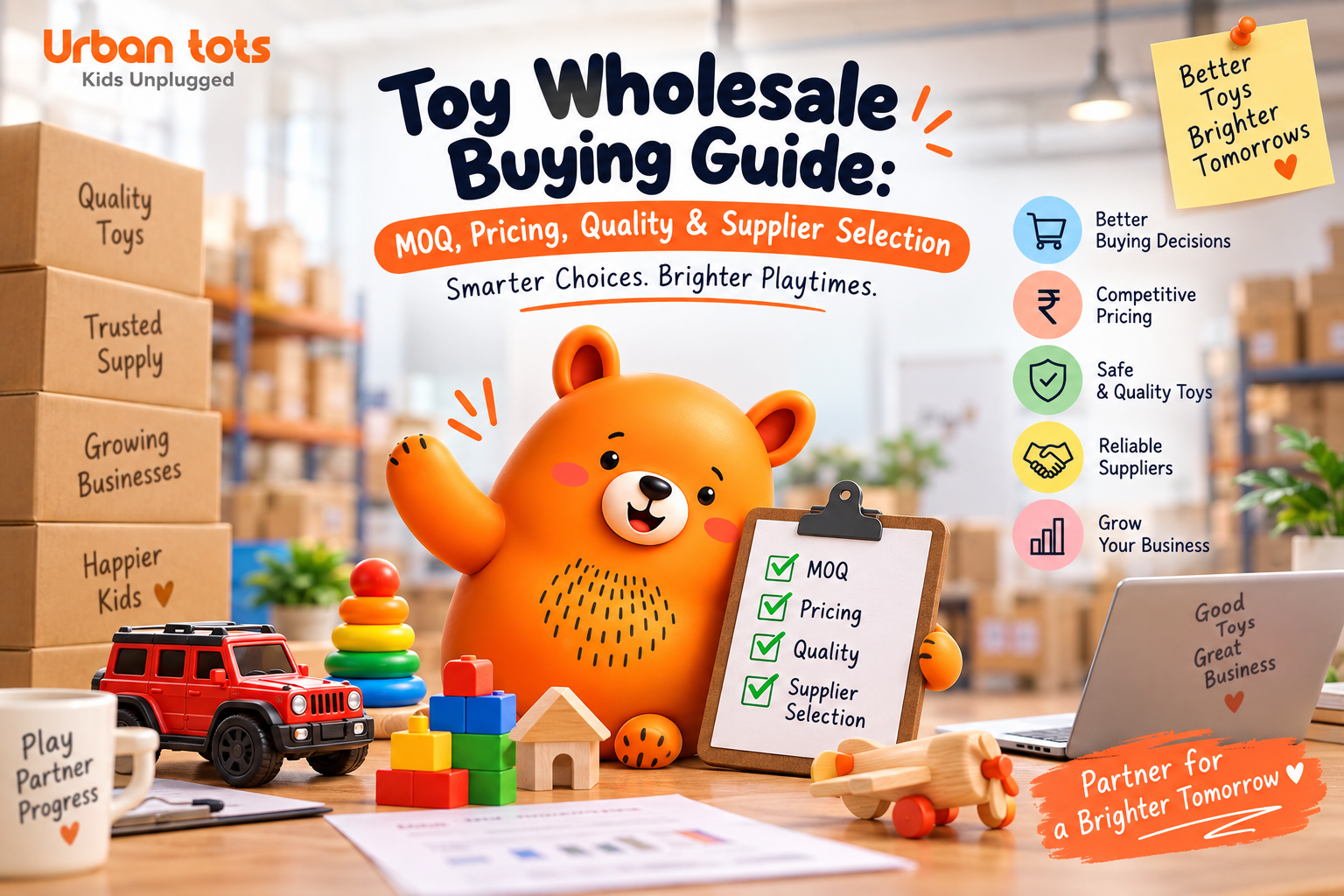
Before finalising any wholesale order, run through a few essentials. Confirm the MOQ and whether it applies per product or across your total order. Request a full landed cost breakdown rather than just a base unit price. Ask for a physical sample and inspect it properly rather than approving based on photographs alone. Verify safety certifications relevant to your target age group. And check the supplier's track record, communication style, and existing client base before committing to a larger order.
None of these steps take very long individually, but skipping even one of them is usually where costly mistakes happen.
Why Urban Tots Works as a Wholesale Partner
At Urban Tots, we've built our manufacturing process specifically around what retailers, distributors, and institutional buyers actually need: consistent quality across every batch, safety certification you can rely on, and flexible order volumes that work whether you're a growing local store or an established retail chain.
As an Indian toy manufacturer, we understand the value of quick communication, dependable timelines, and pricing that makes sense for businesses buying at scale. Whether you're looking for wholesale toys for retailers, sourcing for a school or activity centre, or building out a distribution network, our team works directly with you through sampling, pricing, and order fulfilment, without the back and forth that often comes with sourcing overseas.
If you're exploring wholesale toy options and want a manufacturing partner who understands both the business and product sides, reach out to the Urban Tots team, and let's talk about what fits your order size, timeline, and market.